How To Study For USMLE & MCAT Exams Step By Step

Medical tests such as MCAT and the USMLE or MCAT are among the most difficult educational milestones for doctors who are aspiring doctors.
Medical tests such as MCAT and the USMLE or MCAT are among the most difficult educational milestones for doctors who are aspiring doctors. The success of a doctor is more than effort and determination. It requires strategy, organisation, discipline, as well as the correct study equipment. Most students have difficulty not due to their inability or talent, but due to the lack of the right strategy.
That's where the organised learning tools like Med School Bro can be a huge help. Combining flashcards with comprehensive guidebooks for studying, as well as electronic teaching tools, students are able to simplify their learning and remember knowledge more efficiently.
In this tutorial, we'll go over the steps to study more effectively for medical examinations.
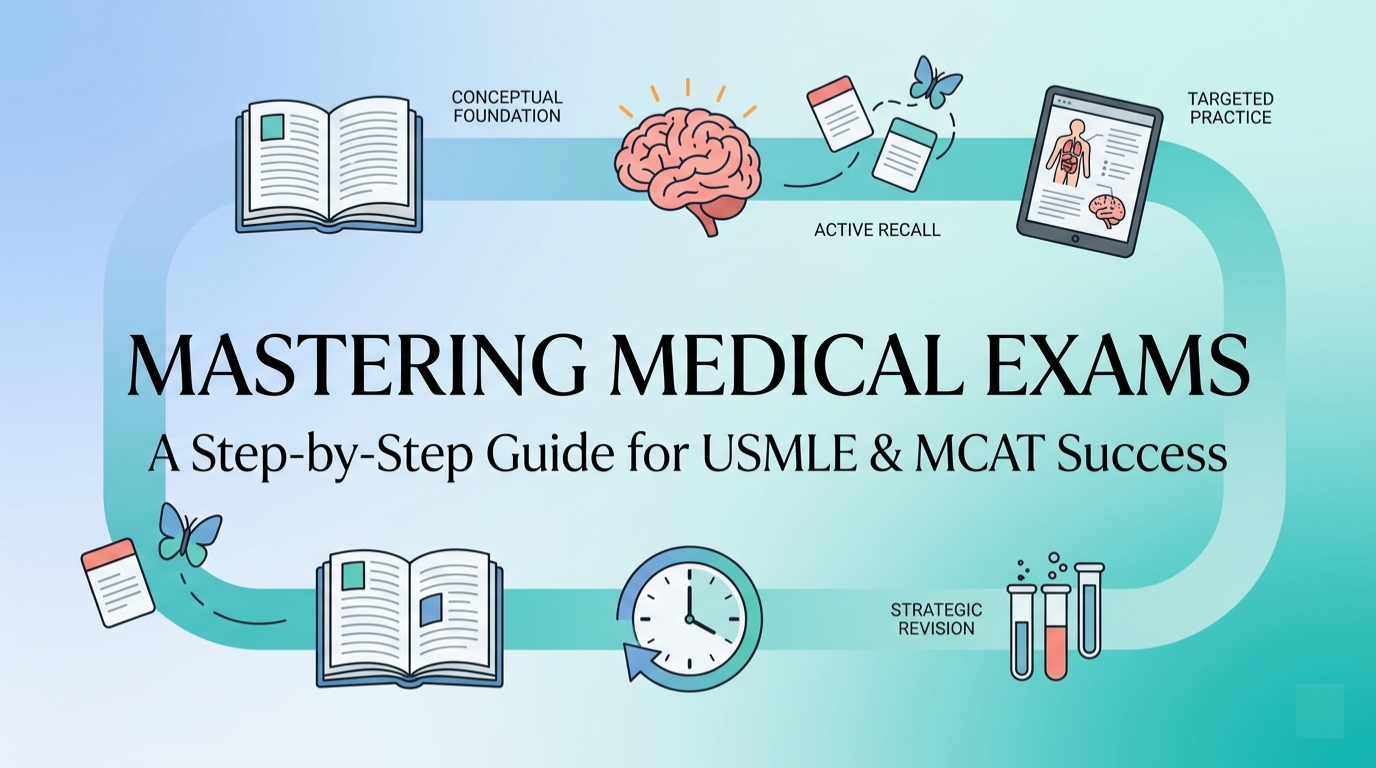
Step 1: Establish An Enduring Foundation Using The Core Concepts
Before attempting to memorise, it is essential to grasp the basic concepts of medical topics. Tests such as the USMLE as well as the MCAT exam aren't just about memorising the information, but also about applying it over various platforms.
The foundation for a solid foundation is well-structured learning resources that cover the most important topics in an organised and clear manner. The subjects of pharmacology, microbiology, along with biology, chemistry and pharmacology need to be systematically studied instead of randomly.
This allows you to connect ideas across different systems, rather than being able to learn facts by themselves.
Step 2: Use Flashcards For Active Recall
A highly efficient method of study for medical students involves active recall. Instead of reading notes passively, flashcards make you search for information in your memory. This improves the long-term retention.
An organised set, such as USMLE Flashcards to study Pharmacology and Microbiology can help break complicated topics down into bite-sized pieces. With the hundreds of flashcards covering the topics of viruses, bacteria, drugs, classes and the body's systems, students are able to review quickly and effectively.
A regular practice of flashcards improves memory speed. This is vital in timed tests.
Step 3: Organise Your Study By Exam Sections
Medical exams are split into various sections, each of which requires a distinct method of learning. As an example, The Complete MCAT Bundle comprises Chemistry, Biology, Psychology and Critical Reading sections, while the USMLE concentrates on systems-based learning.
An organised study guide will help ensure that you are covering all areas equally without skipping any sections. Instead of moving between subjects in a random manner, it is best to adhere to a plan to ensure a balanced study.
This helps reduce stress and boosts overall performance in revision.
Step 4. Combine Books With Digital Learning Tools
Exam preparation for the modern age can no longer be restricted only to books. The use of digital tools plays an important role in aiding students to study better and more effectively.
The Complete USMLE Step 1 Bundle of ebooks and hard copies allow for flexibility. Study from the printed material when you are concentrating deeply and then switch to electronic formats for revisions at the touch of a button.
Certain platforms also have AI-powered study aids that can help you clarify your doubts, provide a summary of subjects, and provide guidance on the revision process.
Combining traditional and digital education creates an experience that is more flexible.
Step 5: Focus On High-Yield Topics
There are many topics that carry equal significance in medical tests. Topics with high yields often appear in exam papers and are vital to comprehend medical scenarios.
To prepare for USMLE preparation, the systems of neurology, cardiology and endocrinology, as well as infections, are especially important. For MCAT Biology, Chemistry and Psychology are extensively tested.
The priority you assign to these subjects will ensure that you maximise the benefits of the time you study without spending energy on irrelevant content.
Step 6: Practice Consistently And Test Yourself
It is crucial to be consistent in passing medical tests. Instead of trying to memorise the information for the exam, students must focus on their daily practice sessions and regularly self-test.
Utilising quizzes, flashcards and practice questions can help improve your learning skills and identify weak points earlier. This lets you adjust your plan of study prior to the exam.
The repeated exposure to questions that are exam-like helps build confidence as well as improve the ability to manage time.
Step 7: Revise Strategically Before Exams
As you approach the end of preparation, revision is crucial, more so than acquiring new concepts. In this stage, you should focus on consolidating what you know already.
Summary and condensed study guide sheets can be extremely useful because they provide an easy review of all subjects without overly analysing the subject.
An organised revision strategy will ensure that you take the test in a clear and confident manner.
Final Thoughts
The preparation for medical tests such as MCAT and the USMLE as well as the MCAT can be a lengthy process. However, the proper strategy will make the process easier to manage. With the help of organised studies, study guides and active recall methods, as well as consistent review, learners can dramatically improve their scores.
Brands like Med School Bro provide all-in-one learning systems that simplify this process and help students stay focused on what truly matters: understanding and applying medical knowledge effectively.
When you're disciplined, with the appropriate sources and an enlightened program, success becomes more doable.
FAQs
Q1: What's the most effective method of studying to prepare for USMLE Step 1?
Make use of an array of organised guidebooks, flashcards and practice tests regularly for an effective and efficient study.
Q2: Can flashcards be helpful for medical examinations?
Yes, flashcards enhance active recall and aid in retaining massive amounts of information more efficiently.
Q3 What is the recommended time to be studying to pass the MCAT and USMLE?
Students typically prepare for several months by committing to studies every day and a regularly scheduled review cycle.