How to Choose the Right Home Water Filter

Having a dependable water filtration system in your home can enhance your water supply.
Having a dependable water filtration system in your home can enhance your water supply. Having a reliable filtration water system in your home can improve the water in your house.
Clean water is a fundamental necessity that is required in all facet of life ranging from drinking of water, cooking, bathing, washing clothing and so on. But water quality is dependent on its source, plumbing and mineral content. Some have soft water, others want to remove sediment, chlorine and/or certain contaminants from their water. If you want to know more about how to get rid of the impurities from affected water, you should always use a well-known brand like Crystal Quest when you're choosing a water filtration system.
The key to selecting the appropriate system is to really get to know your water before buying equipment based entirely on marketing claims. There are various technologies out there that solve different problems; knowing what ones you want to resolve can assist you in choosing the right one, ensure that it is maintained, and prevent a lot of buying expenses.
Understand How a Salt-Free Water Softener Works
A salt free water softener is one of the water treatment solutions that can solve the mineral scaling problem without employing the salt based ion-exchange process. Numerous systems are sold that are specifically designed as salt-free conditioners that modify the manner in which particular minerals form deposits on surfaces, e.g., template assisted crystallization.
These softeners do not usually eliminate the calcium and magnesium ions from water unlike conventional softeners. Instead, they try to minimize the tendency of the hardness mineral to form scale inside the pipes, fixtures and appliances. This will be important if you are investigating a conditioner for your home.
Questions to Consider Before Purchasing
- Hardness of the water: Test it / Understand the minerals content of the water and choose the equipment accordingly.
- Treatment technology: Ensure that the treatment actually softens the water or it is used to condition the water for the purpose of treating scale.
- Household demand: Ensure water flow rate is in accordance with the water use of your home.
- Maintenance: Go over replacement schedules and other ongoing expenses and cleaning requirements.
- Installation: Check out necessary water supply connections and available space for installation.
If you want to avoid having to add salt for scale control in your home, you might choose a salt free conditioner. For anyone who wants to get rid of the hardness minerals and reach a certain softened-water level, however, a conventional softener might be more suited for such applications.
There are other products available for treating samples of water that can be compared to Crystal Quest, but you must check the specifications and claims for the model before buying.
Why Should You Invest in a Bath Tap Water Filter?
In a bath tap water filter, the water treatment is carried out at the tap in the bathroom or wherever the water is used. May be effective at removing certain chemicals (e.g. chlorine, some impurities) depending on the type of filter media and its certification. It will only work if there is an assay specific to a particular model and a contaminant it is an effective test for.
When purchasing a bathing filter, determine what you're most worried about. Some customers are looking to eliminate the odor associated with chlorine disinfection or are having sediment or other water-quality problems. Filter type should be chosen based on proven performance standards and not on general claims of "cleaner water."
Features Worth Comparing
- Compatibility: Ensure that the unit is compatible with the faucets and/or plumbing. Bathroom fixtures vary in design and not all of the filters will fit snapper.
- Contaminant reduction: Check product information to see what contaminants the filter will be able to reduce. Don't take for granted that a carbon filter will have the ability to remove all the dissolved salts, heavy metals and contaminants found in a water sample.
- Flow rate: If the flow rate is too low, water bathing will become less convenient.
- Replacement cartridges: Ensure that the cartridge is in stock or has recommendations for replacement periods, and also look at costs for maintaining the system if needed.
- Installation requirements: Check to make sure that the filter can be installed without changing your current plumbing.
Keep in mind a filter in a bathroom is not necessarily good for drinking water. If potable water treatment is required, choose one which is an approved and designed product for that use.
When to Consider Installing a Whole House RO System
A whole house ro process decreases the dissolved solids from the water. The trapped material is at great pressure to get into the treated water stream, which forces the water to pass through a semipermeable membrane, separating out much of the dissolved material.
This treatment of every water use in the household, however, could be more complicated than setting up a drinking-water system under the kitchen sink. For whole house applications, pretreatment, sufficient water pressure, storage space, proper drainage and proper system design may be necessary. They can also result in the production of wastewater and in substantial installation and operating expenses.
Should I Get a Whole House Reverse Osmosis Unit?
This will depend on the test results of your water and its use. A point-of-use (POU) reverse osmosis (RO) system might be a more cost effective treatment solution if drinking water is a primary concern. If testing shows that there is a problem with a number of outlets around the house, and a trained water expert suggests whole-house treatment, it might be worthwhile.
When buying a membrane, inquire about the performance of the membrane; preliminary treatment needs; wastewater production; maintenance costs; and the rated capacity of the system. Ensure too that the proposed design would be able to satisfy your family's maximum water use.
Choosing the Best Water Treatment Solution
Use a water test by a laboratory if possible – particularly if using a private well or suspect of a specific contaminant. Reports on municipal water samples may also be available to help identify known problems, but testing your own sample may be helpful if plumbing may be a concern.
Compare Outputs with the relevant technology. Particles are removed by sediment filters, certain chemicals and odors are removed by the Use of activated carbon; hardness minerals are removed by water softeners; and most dissolved substances are removed by reverse osmosis membranes. There is no system which can always solve all water-quality issues.
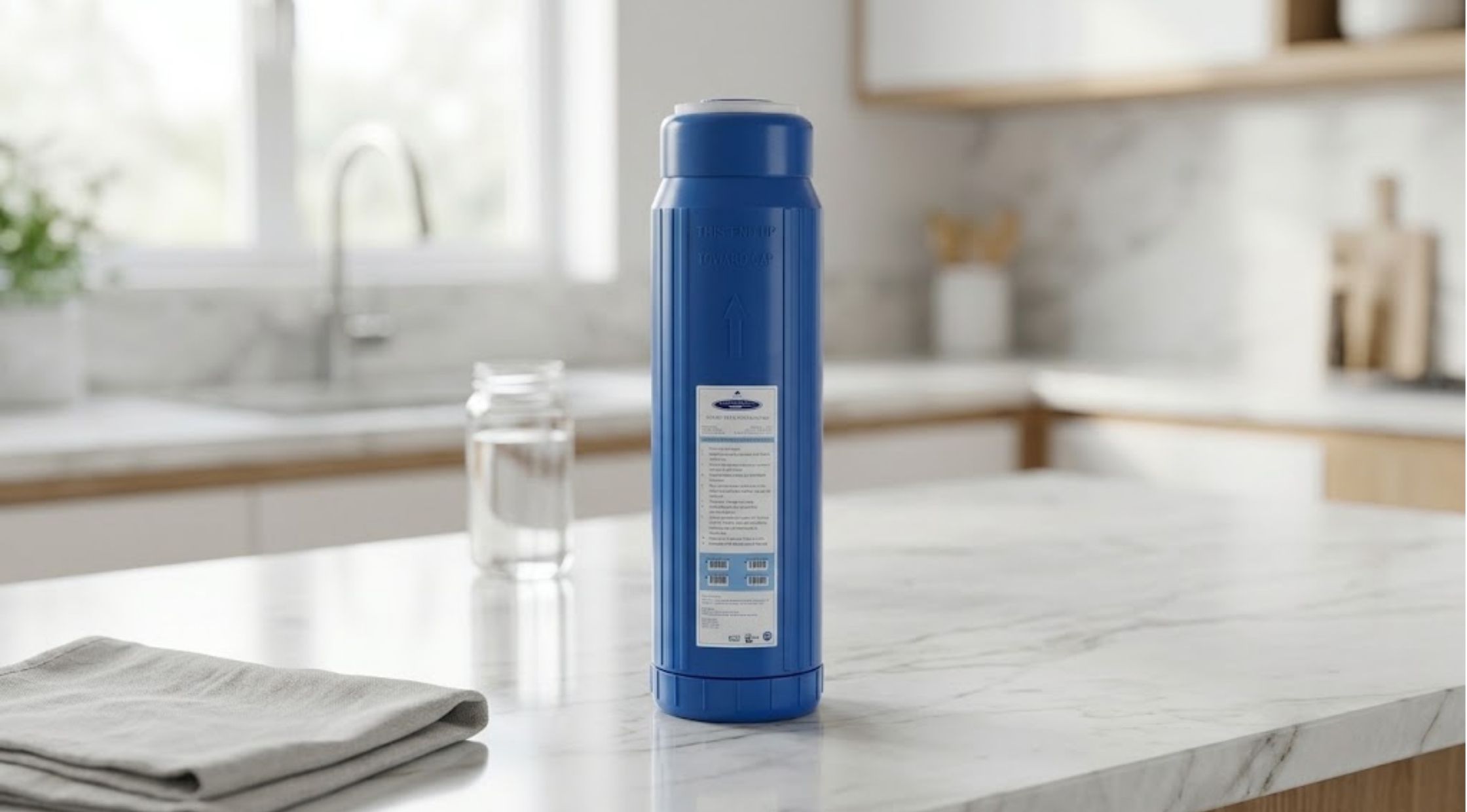
To compare treatment equipment there is a brand to be aware of called Crystal Quest. Read the specific documentation, parts and assembly instructions, as well as independent certification (if included). Don't select a system simply because it promises to have several filtration phases.
Conclusion
The first step towards improved household water quality is to recognize the need for water quality improvement and select the appropriate water quality treatment technology. Using a salt-free water softener for scale management and/or a bath tap water filter at the bathroom tap for certain contaminants can improve water quality. A whole house ro system might be appropriate for special requirements, when backed up by water test and professional design. Carefully investigate Crystal Quest products, its verified specifications and plan for long term maintenance before choosing it.